Ushachi
On Swiss mineral water maps of Europe in the 16th century, Ushachi was listed as a place with healing properties, on the military - during the Second World War - as the capital of a partisan zone.
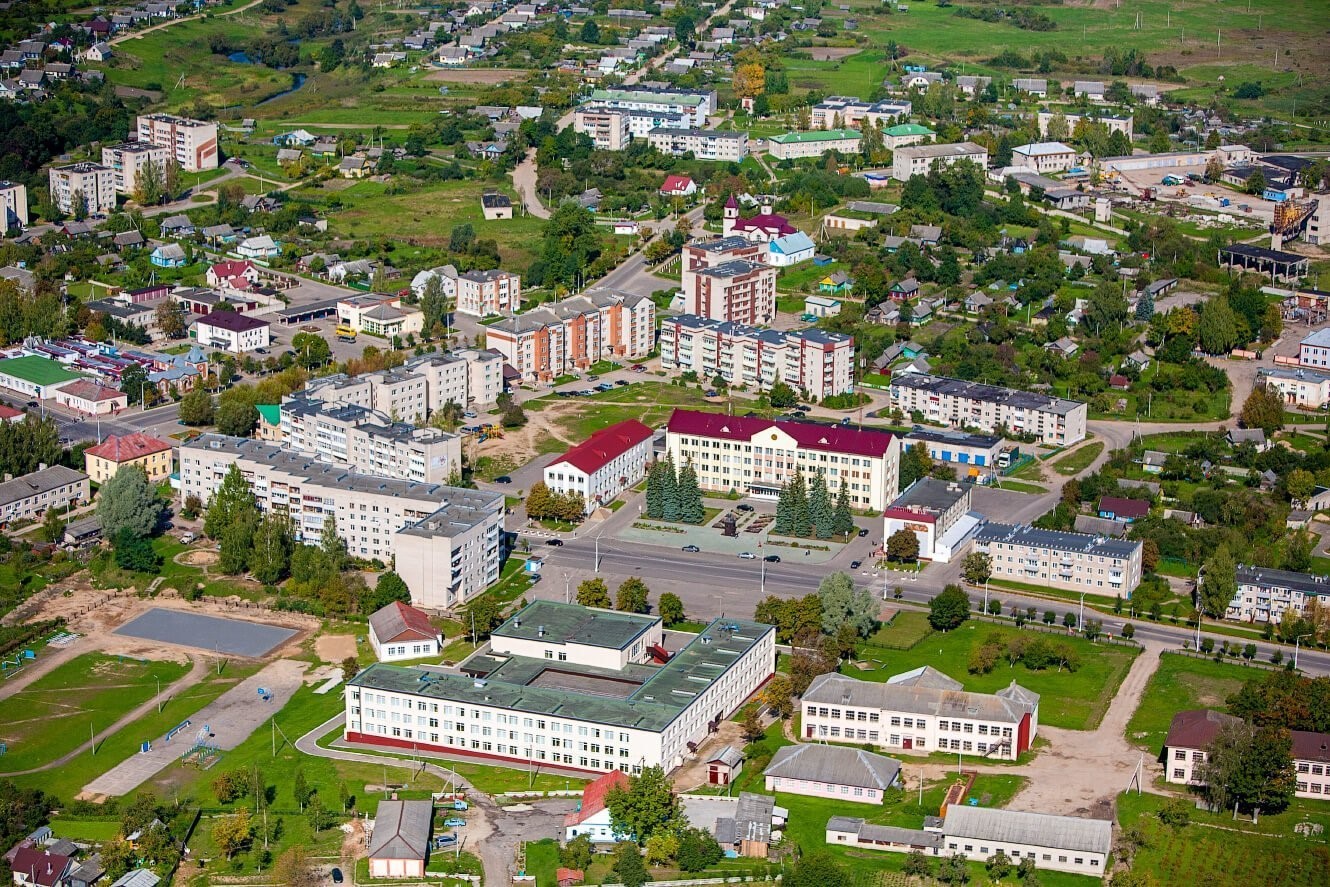
Ushachi was first mentioned in 1458. Since 1594 it has been the center of the parish. In 1667, the Ushachi estate consisted of three villages, there was a pier, a church, a monastery, a tavern, and two large trade fairs were held a year.
In 1758, the town of Ushachi received the Magdeburg Law and the coat of arms - the image of St. Lawrence in a white field near the golden river. Since 1776, Ushachi was considered the center of the Polotsk Voivodeship, the famous diets were held here.
After the second partition of the Commonwealth (1793), Ushachi became part of the Russian Empire. There was one of the oldest Basilian schools in Belarus, as well as a Dominican monastery, burned after Napoleon's overnight stay and on his orders on July 26, 1812.
In 1924 Ushachi became the center of the region. In 1938, they received the status of an urban settlement. In 1941 there were 2700 inhabitants and 600 households.
In September 1942, the partisans carried out several offensive operations, which made it possible to liberate the village and a significant part of the region from the Nazi invaders. In September 1943, the Ushach (later Polotsk-Lepel) partisan zone was created, where there were 16 brigades and more than 17 thousand people. In winter, a partisan airfield operated on the ice of Lake Vechelye. The zone lived according to Soviet laws until April 1944, when the most significant Nazi punitive expedition in the history of the war began. On June 29, 1944, the troops of the 1st Baltic Front liberated Ushachi during the Polotsk offensive operation.