Senno
Senno is a small town surrounded by five lakes, 58 kilometers southwest of Vitebsk, with a population of just over seven thousand people. Since 1938, it has been in the status of the administrative center of the Senno district of the Vitebsk region.
Senno stands on two moraine ridges, separated from north to south by a lake. Lake Senno cuts into the city as a narrow wedge. In its southern part there is a city beach. On the outskirts of the city there is Lake Tukhinskoye, connected with the Sennensky small stream.
Senno is located at a crossroads - motorways diverge from the city to Bogushevsk, Chashniki, Beshenkovichi and Tolochin.
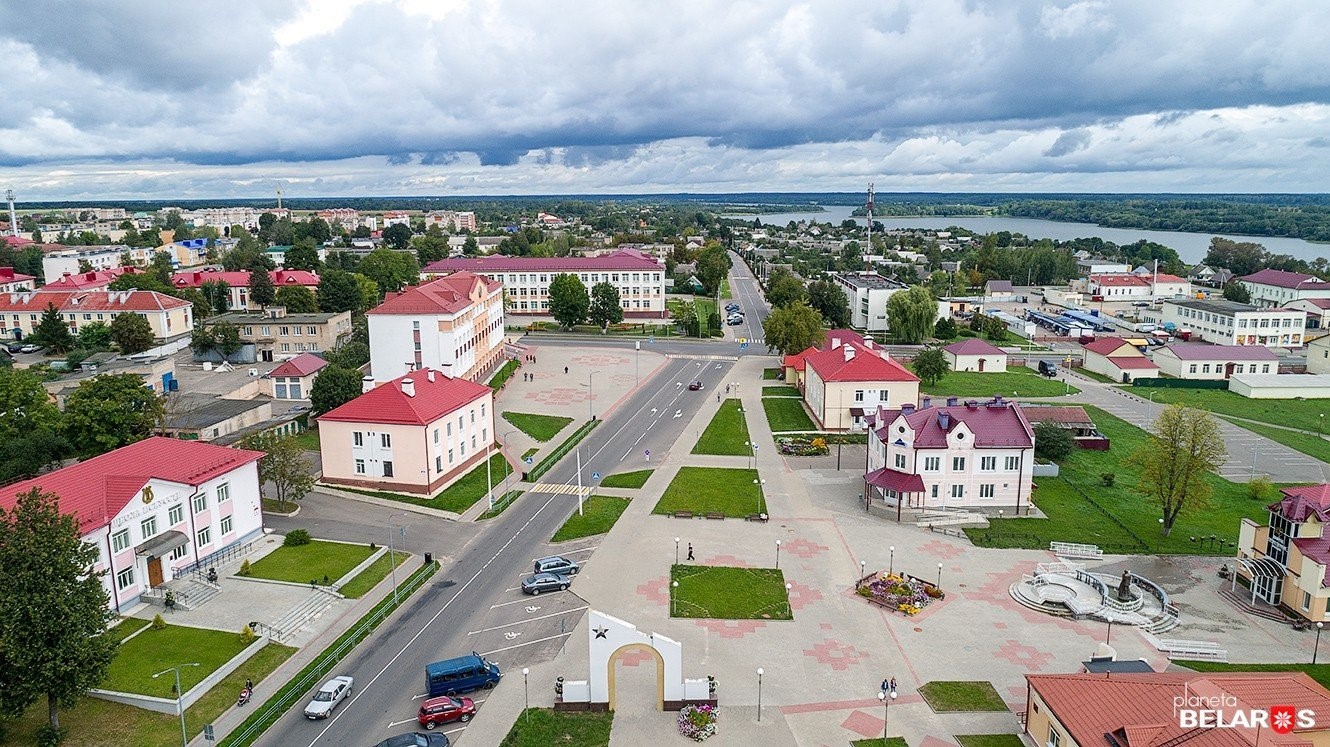
In the 17th century, the Sapieha family ruled the town, and in the next century, the Oginskys. Representatives of noble magnate families contributed to the development and prosperity of the settlement. Senno is also characterized by a unique archaeological location, because the city is located on a hill. Since 1772, Senno was part of the Russian Empire, it was visited several times by emperors and empresses (Catherine II, Alexander I and others). The general plan for the further development of the city was approved in 1778.
In 1860, there was a serious fire, as a result of which many wooden buildings were destroyed. The town was rebuilt for several decades, since the authorities had big plans for urban development. By 1883, a telegraph station was operating in Senno. In the next 20 years, clinics, a dozen enterprises, libraries and printing houses were opened. Since 1924, the Sennsky district was part of the BSSR.